
Benefits of free zones in El Salvador:
- Free zones in El Salvador offer attractive tax exemptions, including taxes on income, import and export.
- These play a crucial role in the generation of employment, especially for women, in sectors such as the textile and clothing industry.
- El Salvador has 17 free zones that house companies dedicated to various activities such as manufacturing, logistics and call centers.
- Sectors like maquila, agriculture, fishing and technology industry benefit.
- Free zones contribute significantly to increased exports and local economic development.
Free zones in El Salvador They play a fundamental role in the economic landscape of the country. governed by the Industrial Free Trade Zones Act, provide companies with the services necessary to operate efficiently and allow them to enjoy attractive tax incentives, such as exemptions from various taxes.. These spaces allow active improvement and the maquila of industrial goods, promoting a competitive environment that promotes growth, investment and job creation. In addition, its strategic location near the main ports and borders of the country facilitates the transport of goods, benefiting both local and national economies.
The Assembly has established laws that offer tax incentives within these territories, encouraging companies to thrive and contribute to the economy of El Salvador. Among the main benefits are:
- Total exemption from duties and import taxes: The companies are exempt from the payment of duties and other taxes on the importation of machinery, equipment, tools, spare parts, accessories, furniture and other goods necessary for their activity.
- Total Exemption from Municipal Taxes: Companies that operate in free zones are free to pay municipal taxes during the period in which they carry out their operations in the country.
- Total Income Tax Exemption: Qualified companies are not subject to income tax payment for a period of 15 years, promoting the stability and growth of their activities.
Economic impact of free zones
The establishment of free zones in El Salvador has made a big difference in its economy. These areas attract foreign investment and help create jobs. They also increase exports and promote the development of new technologies and skills in workers.
In addition, having free zones helps the local economy. Companies in these areas demand goods and services, which further drives the economy.
Companies also seek to positively impact communities through their social projects. Aristos Inmobiliaria, for example, develops various initiatives that reflect their commitment to the community and the environment. These include blood donation and mentoring programs that support the professional growth of young people, environmental talks to schools in the area, educational programs, and cleaning days in rivers and streams, contributing to environmental conservation and care. These actions demonstrate a comprehensive commitment to the community, creating a close and lasting bond.
Contribution to employment in El Salvador
Free zones offer a number of additional benefits, such as tax exemption on transfer of goods, in addition to job creation. Currently, the industrial parks and free zones of Aristos Inmobiliaria are home to around 45 international clients, who allow to generate around 12,000 jobs, considering that 65% of these are made up of women.
Companies located in free zones are usually subject to more flexible regulations, allowing them to operate with greater agility and efficiency. This can attract large companies of different economic sectors, which creates a better dynamism in sources of employment.
A significant benefit of free zones is their contribution to sustainable development. By fostering industrialization and formal employment, these areas can help reduce workplace informality and improve overall social conditions..

Increased exports and their influence on the local economy
Free zones play a key role in increasing exports and, therefore, in the growth of the national economy. By attracting export-focused companies, these areas help diversify the country’s productive matrix and generate a constant flow of foreign exchange. This, in turn, has a positive impact on the local market, promoting economic growth.
According to the report of the Central American Integration System (SICA) and the Central American Economic Integration Secretariat (SIECA), in the first quarter of 2024, El Salvador’s services exports grew by 35.2%, reaching a total of $1,506.8 million.
most prominent sectors were:
- Travel, transportation and manufacturing services on physical inputs: They represented the 79.2% of the total exports, with a growth 47.2%.
- Telecommunications, Computers, Maintenance and Business Services: They grew a 3.2%, representing the 20.8% of the total exports.
El Salvador represented the 28.6% of the total exports of services in the region during this period. As for the main exporters, Panama and Costa Rica They led the region, with 36.2% and 35.2% of service exports, respectively. For its part, El Salvador was in third place together with Guatemala, Honduras and Nicaragua, representing 28.6% of total exports of services in the region.
This increase in exports has a direct impact on the country’s sustained economic growth, as it opens up new opportunities for local businesses and strengthens El Salvador’s position in international trade. Below are some key indicators and their positive impact in different areas of the country, contributing to the economic and social development of El Salvador:
| Indicator | Impact |
| Exports | increase in the volume and value of exports. |
| trade balance | Improvement in the trade balance |
| Investment attraction | Greater interest from foreign investors |
| economic development | Boosting general economic growth |
access to infrastructure
Free zones in El Salvador have been a key factor in the country’s economic development, attracting national and international companies with a number of significant benefits, including tax incentives. These areas offer access to a premium infrastructure that is essential for the successful operations of the companies present there.
Industrial parks are equipped with state-of-the-art technology, which allows companies to stay up-to-date and competitive in a constantly evolving business environment. In addition, the road connectivity facilitated by important arteries such as the Pan-American Highway guarantees easy transport of goods and raw materials, optimizing logistics processes.
The availability of basic services such as electricity and water in these areas of La Libertad helps to guarantee an efficient and productive work environment for companies.
Proximity to seaports is another point in favor, since it speeds up the process of exporting products, which is essential for the competitiveness of Salvadoran companies in international markets..
In short, the free zones not only drive the country’s economic growth, but also promote job creation and promote the transfer of technology and knowledge between local and foreign companies.
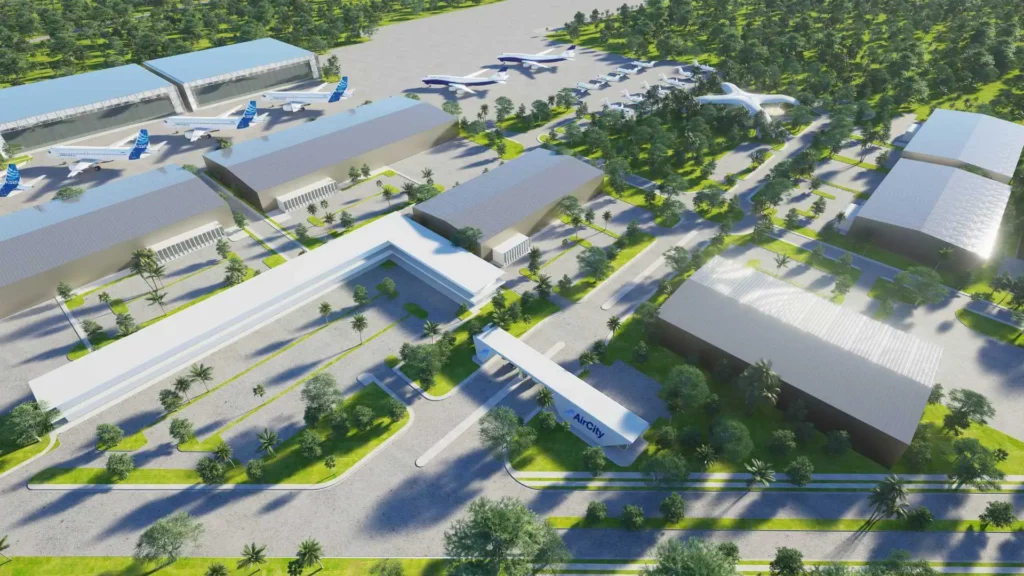
For example: The AirCity project will offer a first-class infrastructure with its own taxiway, facilitating direct access to buildings, hangars and warehouses, which will improve efficiency and connectivity in all its areas. Its design meets high international standards of quality and safety, and thanks to its strategic location, AirCity will allow an efficient distribution to the main cities of North America. The facilities will include warehouses, hangars, offices, a data center, industrial spaces, water treatment, and a safety circuit, among other key services.
Oriented to various industries such as aircraft maintenance, e-commerce, logistics and BPOS, this project will be located in an airport free zone that offers tax incentives and a simplified customs regime, thus promoting a favorable environment for investment and economic growth in El Salvador. With an initial investment of $50 million, AirCity will generate more than 10,000 direct and indirect jobs, boosting the country’s development.
Promotion of foreign investment
El Salvador’s economic growth has been driven significantly by the promotion of foreign investment in its free trade zones. The country’s ability to attract international investors has been reinforced by tax incentives and operational facilities provided to foreign companies in these areas. This has played a vital role in the advancement of the manufacturing industry and the momentum of exports, solidifying El Salvador as an attractive destination for foreign direct investment.
In addition, the establishment of these free trade zones has created employment opportunities for the local population, boosting socioeconomic development and reducing unemployment rates. The influx of foreign capital has also facilitated the transfer of technology and the exchange of knowledge, contributing to the general progress of the economy of El Salvador.
In addition to economic benefits, the integration of sustainable practices and corporate social responsibility initiatives within these free trade zones has generated positive environmental impacts. Companies operating within these areas are increasingly focusing on ecological practices, leading to a more sustainable approach to industrial development in El Salvador.
In general, the strategic promotion of foreign investment in the free zones of El Salvador has not only stimulated economic growth but has also promoted a culture of innovation, sustainability and social responsibility within the country’s industrial panorama.

Frequently Asked Questions
What are the main tax benefits of free zones?
The Tax benefits They are very important for free zones. According to the Law of Industrial Free Zones, the companies that are in these areas do not have to pay certain taxation. This includes the tax on rent, as well as import and export duties. They are also exempted from Municipal taxes. Also, there is incentives To help bring back capital and reinvest profits.
Which sectors benefit most from the free zones in El Salvador?
Several economic sectors benefit from the free zones in El Salvador. Some of the most important are the maquila of industrial goods, textiles, international trade, light manufacturing, service industry, among others..